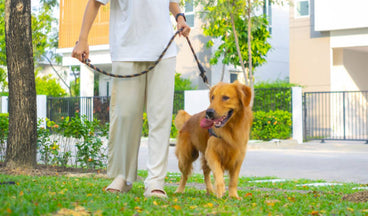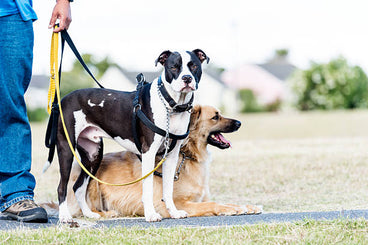
Choosing the right leash can change your entire walking experience with your dog. While retractable leashes offer freedom, standard leashes offer control. But which one is truly best for daily walks? In this blog, we’ll break down the pros, cons, safety, and practicality of both styles to help you decide what fits your dog’s needs—and your walking style.
What is the difference between a retractable and standard leash?
A retractable leash uses a spring-loaded mechanism to extend and retract a thin cord or tape, giving your dog more freedom to explore. A standard leash is typically 4 to 6 feet long and offers a fixed length, giving you consistent control over your dog’s movements.
- Retractable: Adjustable length (up to 26 feet), freedom to roam
- Standard: Fixed length (4-6 feet), better for control and training

Is a retractable leash good for daily walks?
Retractable leashes can be useful in open, quiet areas where your dog can explore safely. However, for crowded sidewalks, busy parks, or training purposes, they may create more problems than benefits. The extended length can make it hard to quickly regain control.
- Great for open parks or trails with minimal distractions
- Allows dogs to sniff and wander at their own pace
- Not ideal for leash training or crowded environments

When is a standard leash the better choice?
A standard leash offers better control and predictability, which is especially important during training or when walking near traffic. It's easier to guide your dog’s movement, stop pulling, and avoid sudden lunges. Most trainers recommend it for daily use.
- Best for training and walking in high-traffic areas
- Helps discourage pulling and sudden lunges
- Ideal for puppies, reactive dogs, or older dogs with mobility issues

Shop Standard Leashes for Dogs
Are retractable leashes dangerous in any way?
They can be. The thin cord of retractable leashes has caused burns, cuts, and even amputations in extreme cases when tangled. They can also break if your dog runs too fast or pulls hard, especially if they’re a large or strong breed. Always supervise and use with caution.
- Thin cord can tangle around people or other pets
- Hard to quickly pull a dog back during emergencies
- Mechanical failure can occur with cheap or worn models
Shop Durable Safe Retractable Leashes
Which leash is better for training a puppy?
A standard leash is hands-down the better option for training. It gives you consistent control and keeps your dog focused on your cues. Retractable leashes allow too much freedom and can delay your pup’s understanding of leash manners.
- Standard leash helps reinforce heel and sit commands
- Limits distraction and encourages walking beside you
- Promotes safe, consistent boundaries during walks

Shop Leashes for Puppy Training
Can I use both types of leashes for different situations?
Yes, many dog owners keep both types on hand. You might use a standard leash for city walks or vet visits and a retractable one for quiet nature trails. The key is knowing when to use each and keeping safety in mind, no matter the setting.
- Use standard leashes for control and training
- Use retractables for relaxing walks in open spaces
- Always monitor your dog’s behavior and surroundings