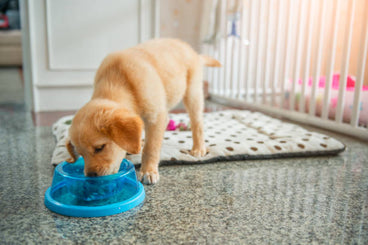
Just like human babies, puppies grow fast and need frequent meals to support their energy and development. A consistent feeding schedule helps maintain steady blood sugar levels, ensures proper digestion, and prevents overeating. Puppies also burn calories quickly, so regular, small meals help them stay active and healthy throughout the day. To make mealtime easier

Browse easy-to-digest puppy foods here.
How Many Meals Does a Puppy Need per Day?
The number of meals your puppy needs depends on their age and size. Very young puppies between 6 to 12 weeks old should eat about four times a day because their stomachs are small but their energy needs are high. Once they reach three to six months, you can reduce feedings to three meals per day. By the time they’re six months and older, most dogs do well on two meals daily. For balanced nutrition suited to every age

Shop age-appropriate puppy food here.
How Much Should You Feed at Each Meal?
Portion size matters as much as frequency. Overfeeding can cause rapid weight gain, which puts stress on developing bones and joints. Underfeeding, however, can lead to nutrient deficiencies and stunted growth. The best approach is to follow the portion guidelines on your puppy food packaging and adjust based on your vet’s advice. For convenient portion control

Do Puppies Need Night Feedings?
Very young puppies under 8 weeks may still need a small feeding at night, especially if they’re adjusting from nursing. Their tiny bodies can’t store energy for long, so skipping nighttime meals could cause low blood sugar. Once your puppy is about 10–12 weeks old, their stomach capacity increases, and they can usually go through the night without food. To keep them comfortable overnight

find gentle puppy food suitable for night digestion here.
What’s the Best Time to Feed a Puppy?
Spacing meals evenly throughout the day helps maintain energy levels and prevents tummy troubles. For example, if your puppy eats three meals daily, aim for breakfast around 7 AM, lunch at noon, and dinner around 6 PM. This gives their digestive system time to rest and keeps their metabolism steady. For easy daily feeding planning

How to Transition From Puppy to Adult Feeding Schedule
When your puppy nears adulthood — usually around 10 to 12 months for small breeds and up to 18 months for larger breeds — it’s time to reduce meal frequency. Transition gradually by blending adult dog food with puppy food over 7 to 10 days to avoid digestive upset. For smooth meal transitions,

explore transitional puppy-to-adult dog food here.
Final Thoughts: Keeping Your Puppy Healthy and Happy
Feeding your puppy the right amount, at the right time, and with the right food lays the foundation for lifelong health. Consistent meal timing supports steady energy, proper digestion, and emotional comfort — all key to raising a happy dog. For wholesome food options tailored to every stage of growth