Why Protection from Wind and Snow Matters
Cold winds and snow can make your dog’s outdoor time uncomfortable and even dangerous. A properly protected dog house keeps your pet warm, dry, and safe from harsh elements. Insulation, windproofing, and waterproofing are key to maintaining a stable temperature and ensuring your dog feels secure. When temperatures drop, even a few extra layers of warmth can make a big difference. To get started with winter-ready setups

shop insulated dog houses here.
Choose the Right Location
Placement plays a huge role in protecting your dog’s shelter from weather. Position the dog house near a wall, fence, or hedge that blocks cold winds. Avoid low-lying areas where water or snow might collect. Slightly elevating the house helps prevent moisture buildup and keeps the floor dry. You can also add a windbreak using tall plants or wooden panels. To explore sturdy raised bases

browse elevated dog houses here.
Insulate the Dog House Walls and Floor
Proper insulation is the heart of winter protection. Line the interior walls with foam panels, thermal blankets, or reflective foil. Add straw or cedar shavings for natural warmth and comfort. Wooden houses benefit from adding an extra plywood layer on the floor. Avoid blankets that retain moisture, as they can freeze overnight. For pre-insulated models

Check out weatherproof dog houses here.
Use a Weatherproof Door Flap
A heavy-duty vinyl or rubber flap at the entrance acts as a shield against wind and snow. It lets your dog go in and out freely while keeping the cold air out. Transparent flaps are ideal since they allow light inside, and some even come with magnetic closures for a snug seal. If your area gets strong winds, secure the flap edges to prevent flapping. For durable flap kits

Elevate and Waterproof the Base
Snow and rain can seep in from the bottom, making the floor damp and cold. Elevating the dog house by just a few inches helps airflow and keeps the base dry. Use bricks, pallets, or a built-in raised stand. Apply waterproof sealant or use rubber mats under the base to stop melting snow from reaching the floor. To explore weatherproof flooring solutions,

Cover the Roof and Exterior
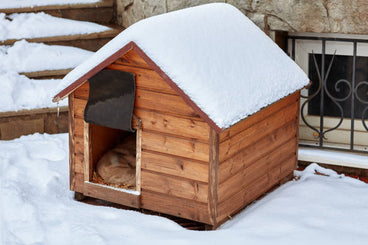
Use a sloped or double-roof design to allow snow to slide off easily. You can also add a waterproof tarp or insulated cover over the roof for extra warmth. Avoid metal roofs—they get cold quickly and can cause heat loss. Wooden or asphalt-shingle roofs are better for trapping heat and preventing leaks. To find durable covers

Shop waterproof dog house here.
Keep It Cozy Inside
Add soft, dry bedding that traps heat, like straw, wool, or memory foam pads designed for pets. Avoid cotton blankets that can hold moisture. Heated pet mats or self-warming pads are great for colder regions, but make sure they are designed for outdoor use and chew-safe. Replace the bedding regularly to keep it fresh and dry. For cozy inserts

Conclusion: A Safe Winter Haven for Your Dog
Protecting your dog’s house from wind and snow is about comfort, health, and love. With insulation, elevation, and smart placement, you can make your pet’s outdoor shelter safe even in freezing weather. A warm, windproof space helps your dog rest better and stay healthy all winter long. To complete your setup